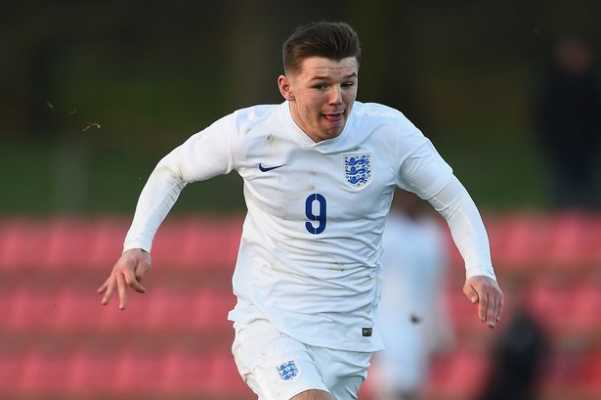

France’s Hugo Ekitike reportedly suffered ruptured Achilles, set to miss World Cup
The football world wakes up today to news that’s nothing short of a tragedy for one of Europes brightest young talents. Reports emerging from the French media, prominently cited by sources like L’Equipe, indicate that Hugo Ekitike, the promising young forward, has suffered a ruptured Achilles tendon. This devastating injury is set to rule him out of the upcoming FIFA World Cup, crushing what would have been his maiden appearance on football’s grandest stage.
For any player, an Achilles rupture is among the most feared diagnoses. It’s not just a season-ending injury; it’s one that requires an arduous, often nine-to-twelve-month rehabilitation period, and can significantly impact a player’s long-term athleticism and explosive power. For a forward whose game relies heavily on quick bursts, acceleration, and aerial prowess – qualities Ekitike possesses in spades – the road to recovery will be both physically and mentally gruelling. Its a devastating blow, not only for the player himself but also for France’s tactical flexibility.
Ekitike’s Potential Role in Deschamps’ System
As a European soccer tactical expert, I’ve been closely monitoring Ekitike’s ascent. His move from Reims to Paris Saint-Germain, initially on loan, marked him as a player of significant promise. What made Ekitike an intriguing prospect for Didier Deschamps’ World Cup squad was his unique profile. Standing at 6’3″, he offers a physical presence rarely seen in the modern French attack, which is often characterized by pace and technical wizardry from Kylian Mbappé, Ousmane Dembélé, and Christopher Nkunku.
Ekitike could have provided Deschamps with a genuine plan B, or even a nuanced tactical alternative. Imagine him as a target man against deep-lying defences, holding up play, bringing others into the game, and contesting aerial duels. His ability to link play, combined with an intelligent predatory instinct in the box, would have offered a different dimension to the traditional French attacking setup. Against teams pressing high, his quick turn of pace for a big man would have been invaluable for quick transitions. Furthermore, he’s known for his tireless pressing, which aligns perfectly with Deschamps’ often pragmatic approach to defending from the front. His inclusion would have defintely allowed Deschamps to rotate tactics more effectively, keeping opponents guessing.
France’s Depth and Deschamps’ New Dilemma
Of course, France possesses an embarrassment of riches in attacking talent. Olivier Giroud, despite his age, continues to deliver crucial goals and provides that crucial focal point. Karim Benzema, when fit, remains one of the world’s most complete strikers. Antoine Griezmann’s tireless work rate and creative spark are indispensable. Then there are the dynamic wingers like Mbappé and Dembélé, and versatile attackers like Nkunku, Kingsley Coman, and Moussa Diaby. However, Ekitike offered a specific blend of youth, raw power, and an emerging tactical understanding that none of these players fully replicate.
His absence forces Deschamps to rely more heavily on the tried and tested, which isn’t necessarily a bad thing given their success, but it does remove a promising wildcard. We’ve previously discussed France’s incredible squad depth, and while it’s deep enough to absorb this blow, the specific profile Ekitike offered will be missed. The tactical options become slightly more predictable without him, potentially narrowing the ways Deschamps can adapt mid-game or against specific opponents.
Impact Beyond the World Cup
This injury doesn’t just affect France’s World Cup ambitions; it’s a significant setback for Ekitike’s burgeoning career at Paris Saint-Germain. Having only recently secured his permanent move, this extended period on the sidelines means he loses crucial development time, an opportunity to integrate further into the PSG system, and invaluable experience playing alongside global superstars. The mental fortitude required to return to peak performance after such a significant injury will be immense. Young players often struggle with the psychological aspects of long-term recovery, fearing they might not regain their previous form or speed.
The timing is particularly cruel for a player who, at just 20 years old, was on the cusp of an international breakthrough. The World Cup is a shop window, a proving ground, and a career-defining moment. To have that dream snatched away at the last moment is truly heartbreaking.
From everyone at 234Sport, we extend our deepest sympathies to Hugo Ekitike. We hope for a swift and complete recovery, and we eagerly await his return to the pitch stronger than ever. This serves as a stark reminder of the fragile nature of a professional footballer’s career, where one moment of misfortune can derail years of hard work and ambition. His absence will be felt, but the focus must now turn to his recovery and the next chapter of his undoubtedly promising career.