
NFL Draft grades are ridiculous and often wrong. Here’s why they’re still useful
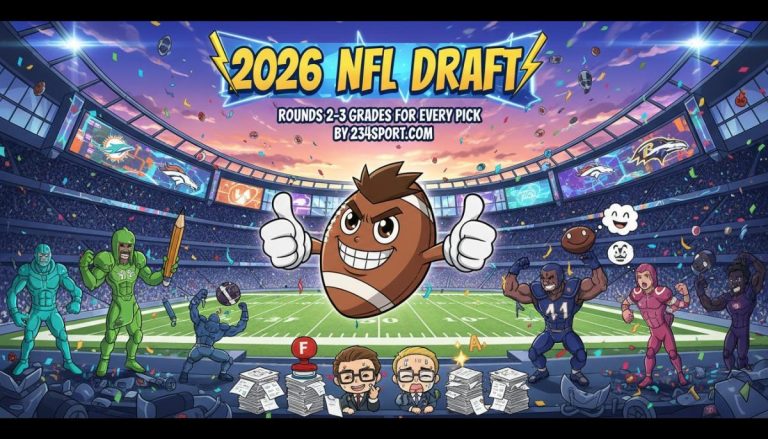
Oh, the NFL Draft. My annual descent into a spiral of unwarranted hope and existential dread. And then, the grades. Ah, the dreaded, *inevitable* draft grades. My stomach lurches just thinking about them. Every single pundit, every single outlet, rushing to slap an “A-” or a “C+” on a team’s entire future, mere hours after the final pick is made. It’s ludicrous, isn’t it? A collective delusion that we all participate in, year after miserable year.
How can anyone, with a straight face, assign a definitive grade to a group of college kids who haven’t even learned the locker room combination yet? We’re talking about careers that will unfold over five, ten, maybe even fifteen years. There are injuries, coaching changes, unexpected breakouts, and spectacular busts lurking in the shadows, waiting to ambush these pristine evaluations. Remember when everyone called the Texans’ 2017 draft a masterclass? Or the Raiders’ 2019 haul a guaranteed Super Bowl run? Exactly. The memory of these instant ‘experts’ is as fleeting as my own sanity during an overtime game. It’s all just noise right a cacophony of snap judgements dressed up as informed opinion and frankly it makes my teeth ache.
So, why do we bother? Why do I, a perpetually anxious observer, still click on every single one of those “Grade the Draft” articles?
Because, dear reader, we are creatures of habit, and perhaps, a little bit pathetic. But there’s more to it than just morbid curiosity or the desperate need for validation that our team didn’t *completely* botch it. Draft grades, for all their inherent flaws, serve a vital, albeit perverse, purpose. They’re a conversation starter, a shared agony, a communal delusion we can all get behind – or furiously argue against.
They give us something to talk about beyond the immediate “who picked whom.” They fuel the sports talk radio debates, the online forums, and those uncomfortable family dinners where your uncle insists his team got robbed. They provide a baseline for future “I told you so!” moments, whether you were right or spectacularly wrong. It’s a low-stakes form of collective fortune-telling, a way to project our hopes and fears onto a projected outcome, knowing full well the universe will probably laugh in our face.
And deep down, nestled in the dark corners of our paranoid minds, we secretly hope that *this* year, maybe *this* year, one of those magical A-grades will actually stick. We scan them, looking for validation, for a glimmer of hope that our chosen heroes made the right call. We even look for the low grades, desperately hoping to spot an undervalued player, a future gem that the “experts” missed. It’s how we try to identify those dime players who slip through the cracks, the ones who defy the initial, shallow assessments.
So yes, they’re ridiculous. They’re often wrong. They contribute to my elevated heart rate and my fans expectations that are completely unrealistic. But I’ll be damned if I don’t check them every single time, clinging to the faint hope that perhaps, just perhaps, this time the media isn’t part of a vast conspiracy to make me question everything I believe about professional football.