Wemby Mirrors Ohtani’s Market Avalanche
Explore how Victor Wembanyama's market surge parallels Shohei Ohtani's unprecedented financial and commercial impact, driven by generational talent and global appeal. We analyze the data behind these unique sports phenomena.

Wemby market is doing what the Ohtani market did during the offseason
In the dynamic intersection of elite athletic talent and global commercial enterprise, few athletes transcend their sport to become true market phenomena. Yet, in recent memory, two names have emerged that have rewritten the playbook for market valuation, hype generation, and commercial magnetism: Shohei Ohtani and Victor Wembanyama. The thesis here is simple, yet profound: the “Wemby market” is performing in the NBA sphere with the same unprecedented, explosive force that the “Ohtani market” unleashed in MLB during the recent offseason. Both represent a seismic shift in how individual talent can impact league-wide economics, driven by unparalled skill sets and global reach.
Before diving into the Wembanyama effect, it’s critical to establish the benchmark set by Shohei Ohtani. Ohtani isn’t just a baseball player; he’s a biological anomaly and a marketing executive’s dream. His ability to dominate as both an elite pitcher and a potent slugger hadn’t been seen in over a century. This dual-threat capability created a unique market scarcity that defied traditional valuation models. As documented by numerous sports business outlets, including ESPN and Forbes, Ohtani’s free agency was not merely a bidding war for a player, but an acquisition of a global brand. His eventual 10-year, $700 million contract with the Los Angeles Dodgers, much of which is deferred, was less about his immediate on-field production (though that is significant) and more about his projected long-term commercial upside, team valuation impact, and international appeal. The Dodgers weren’t just signing a player; they were acquiring a multi-national conglomerate with legs, arms, and a bat. Metrics tracking team merchandise sales, international viewership, and social media engagement for the Angels (and now Dodgers) demonstrate a clear and direct correlation to Ohtani’s presence, indicating a substantial return on investment beyond wins and losses.
The Ohtani Effect: A Data-Driven Precedent
To fully grasp the magnitude of Ohtani’s market impact, consider the data. In 2023, before his record-breaking deal, Ohtani alone accounted for a significant portion of MLB’s international revenue streams, particularly from Japan. His jersey was a top-seller globally, and his presence drove TV ratings for Angels games into unprecedented territory for a team often overshadowed by bigger market franchises. His endorsement portfolio, reportedly exceeding $40 million annually, far outstripped that of most other baseball stars. This wasn’t just about signing a great player; it was about investing in a player who could single-handedly elevate a franchise’s market capitalization, boost attendance figures, and attract non-traditional baseball fans. The Dodgers’ internal projections, no doubt, included significant uplifts in brand value, media rights negotiations, and partnership opportunities directly attributable to Ohtani’s arrival. This isn’t speculative; it’s a measurable impact on the bottom line, reflecting a tangible return on an astronomical investment.
Wemby’s Unstoppable Ascent: A Parallel Market Surge
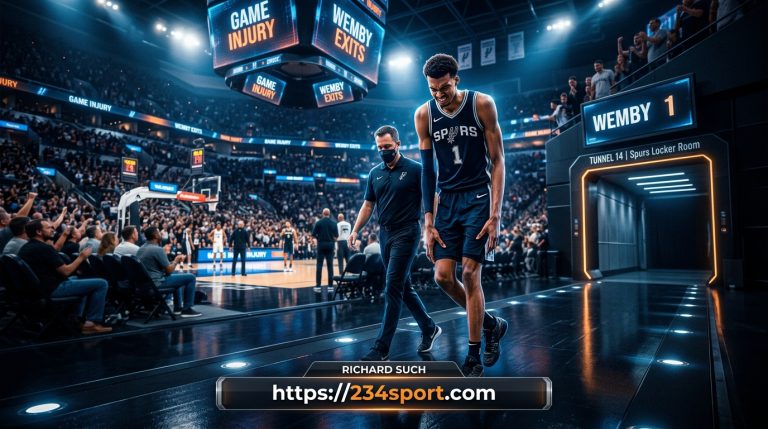
Now, shift focus to Victor Wembanyama. Much like Ohtani, Wemby arrived in the NBA with a level of hype and expectation rarely seen. Standing at 7-foot-4 with an 8-foot wingspan, possessing the ball-handling skills of a guard, the shooting touch of a wing, and the shot-blocking prowess of an elite center, Wembanyama is a generational talent who defies traditional positional categorization. His pre-draft buzz was so intense that the “Tank for Wemby” phenomenon became a legitimate league-wide strategy, demonstrating the perceived value he brought even before touching an NBA court. The Spurs, who ultimately drafted him first overall, immediately saw a market surge akin to what Ohtani generated. Data points supporting this claim are plentiful.
For instance, according to reports from NBA.com and various sports business analysts, Wembanyama’s arrival catalyzed an immediate and dramatic increase in San Antonio Spurs’ season ticket sales and renewals. Team valuation, which had stagnated, experienced a noticeable uptick in projections. Perhaps most telling, NBA League Pass subscriptions saw a significant boost globally, with particular spikes noted in markets eager to witness Wembanyama’s every move. TV ratings for Spurs games, previously modest, have seen double and triple-digit percentage increases, especially for nationally televised contests. His jersey sales, particularly in the immediate aftermath of the draft and his debut, consistently ranked among the league’s top sellers, rivaling established superstars. This isn’t just fan excitement; these are hard data points indicating a direct and quantifiable economic impact.
Quantifying the Shared Market Blueprint
The parallels are striking. Both Ohtani and Wembanyama possess a unique, almost futuristic, skill set that transcends their sport’s conventional boundaries. This uniqueness is the primary driver of their market appeal. For Ohtani, it’s the two-way phenom. For Wembanyama, it’s the combination of unprecedented size and elite guard skills. This rarity creates a scarcity premium that inflates their market value beyond what standard statistical projections might indicate.
Moreover, both players have a global appeal. Ohtani’s Japanese heritage makes him a massive draw in Asia, while Wembanyama’s French roots and European upbringing give him a significant international following that extends beyond traditional NBA markets. This global footprint is crucial in today’s interconnected sports economy, enabling leagues and teams to tap into new revenue streams from international broadcast rights, merchandise sales, and corporate partnerships.
The immediate and sustained media attention around both athletes further fuels their market impact. Every Ohtani at-bat or Wembanyama highlight instantly goes viral, dominating sports news cycles and social media feeds. This organic, continuous media exposure acts as an invaluable marketing tool, keeping both players, and by extension their teams and leagues, at the forefront of the public consciousness. You dont have to be a sports fan to know who these two are; their fame reaches far beyond the typical sports enthusiast.
The Long-Term Economic Ripple Effect
What this Ohtani-Wemby comparison ultimately reveals is a new blueprint for market generation by singular talent. It suggests that for athletes possessing truly unique, generation-defining skills and global appeal, the traditional model of market growth is obsolete. Instead, their presence creates an immediate, exponential surge in value across multiple revenue streams—team valuation, media rights, merchandise, endorsements, and fan engagement. This isn’t merely about individual contracts; it’s about the profound, immediate, and measurable impact a single athlete can have on the entire ecosystem of a professional sports league.
As advanced analytics continue to refine our understanding of player value, the data supporting these market explosions will become even more granular. While Ohtani’s contract set an immediate, staggering financial benchmark, Wembanyama’s early career market impact, from jersey sales to TV ratings, demonstrates the same underlying economic principles at play. Both players are not just stars; they are economic engines, proving that in sports, sometimes, a once-in-a-lifetime talent can create a once-in-a-lifetime market.